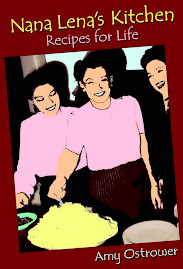
In 1982, I purchased my first video camera, which in those days consisted of a twelve-pound camera connected by cable to a fifteen-pound tape deck, which you carried on one shoulder, while balancing the camera on the other shoulder, all the while making sure that the cable doesn’t get caught say, on a doorknob and ruin the shot. I had brought the camera home for Pesach to record my grandmother’s gefilte fish-making process, a recipe I had heard about and tasted for many years but never actually witnessed… an old family recipe she learned to make as a child. Nana Lena was a natural in front of the camera. It didn’t hurt that I was the operator and, like the youngest child at the Seder, asking all the questions. She entered the room carrying a large white Styrofoam cooler. “Okeydokey, we’re on the way to the fishmaking, and it’s a big thing. This is the fish I got from the market… twenty-two pounds of rockfish, whitefish, and trout, which is about twelve pounds after it’s skinned and filleted, and about another pound that I clean off the bones. All that’s already taken care of. I didn’t want to leave everything to do in one day. Making fish is really a three-day process: a day to shop, a day to cook, and a day to cool.” She took each piece of fish out of the bag and washed it, squeezing off the excess water. “You don’t think I’m an old Bubbie, do you?”
“Of course not, Nana.”
“You see, I put a piece of waxed paper between each piece. Then I sealed it all inside a freezer bag. What are you doing, closing in on the fish? If Pat sees this, she won’t want to eat it.”
“Well, then, I won’t show the video to Pat until after dinner.” I zoomed in on her brown spotted hands, closing in on her big diamond ring. “Aren’t you going to take your ring off, Nana?”
“So I won’t lose it? So it can be yours someday? Oy, your mother would kill me. I was just thinking about what Bubbie Sareva would say. Sareva definitely wouldn’t like that. She removed her ring and placed it in the windowsill next to her violets. A huge pot of water heated on the stove. Nana started cuttingthe onions. “I’ve got five large onions here. Some of them go into the stock; the rest I’ll use in the fish later. I don’t measure, so I don’t know exactly how much I’ll be using. I can only tell when I feel the consistency of the fish; then I’ll know if I’ve got it right. “Let’s start with the stock.” She cut the onions, skins and all,right over the pot. “So you take the yellow skins and put it in the stock pot. It makes the fish nice and yellow, golden yellow. Now you’re going to be showing this to your children fifteen years from now, and they’re going to say that this lady must have been crazy putting the peel in the pot. And they probably won’t like what I’m going to do next either,” she said, as she took three large fish carcasses, heads and all, and dropped them into the steaming water. “The fish heads, that’s what gives you a good strong stock.” She looked up at my camera and said with a twinkle, “You know what it smells like?” I shrugged my shoulders. “Fish!” She laughed. “Now I’m going to add more onion peel and celery, and we’re going to put in the carrots. The carrots are cut thick, so you can take them out of the pot later and use a littleslice on top of the fish for decoration. That’s how Bubbie always made it, with the carrot on top. You think I’ll ever amount to being a cook, Amele?”
“You are the best cook I know, Nana.”
“That’s music to my ears.” She wiped her forehead with her elbow. “With that, I’ll tell you another story about when Bubbie was sick; I guess it was thirteen, no, fourteen years ago. It was just this time of year, and I made everything early and took a whole Pesach tray to the hospital to her. She was most appreciative. She took a bite of the fish, and she looked up at me and spoke to me apologetically. “Lena, you won’t mind if I tell you something?” And I said, “No, Mama, what?” She said. “Der fish darf einkoch’n eine halbe sho.” “Do you know what I said?” Nana Lena asked me.
“The fish has to cook about a half hour longer?”
“Very good! Your Yiddish is improving. I knew it had to cook a little longer, but I didn’tthink it was a half hour. I was in a hurry because I wanted to get it over to Mama for her Passover meal before we had our Seder. I took the whole Pesach Seder dinner to her, and I know she enjoyed it. Especially my matzie balls.”
“All my married years, I’ve made gefilte fish for the holidays,and when the grandchildren came along and they loved it as much as they did, I felt that as long as I can stand on these two old legsand make it, I will.”
“You know we love it, Nana.”
“I know.”
That was a glimpse of what Passover preparations were like in Nana Lena's kitchen. I'll always remember the fun we had preparing the seder meal. Tell me about your family experiences and share your recipes by commenting below.
Showing posts with label Passover stories. Show all posts
Showing posts with label Passover stories. Show all posts
Monday, April 6, 2009


Sunday, April 13, 2008
Spring Cleaning
It was a week before Passover, and I was helping Nana Lena with her annual spring cleaning. She didn’t take a feather and use it to dust out the remaining crumbs of chumetz, as Jewish women are instructed to do before the holiday, with a candle to better see the crumbs, a feather to dust them out of cabinets, and a spoon to catch them with, but she did like to have the house all clean for Pesach. As I dusted each antique cup and saucer she had on display in the dining room, I couldn’t help but notice the piece of masking tape underneath, each one labeled with someone’s name.
“If there is anything you want, put your name on it.”
“Nana!”
“I’m serious. Tell me now, and we’ll put a tape on it.”
“I can’t.”
“You’ve got to speak up to get what you want. Go ahead. Pick one.”
I point to one of the cups and saucers, Victorian with yellow roses. “I like that one. It reminds me of you.”
“A good choice. I was always partial to yellow roses.” She showed me another cup in reverse colors. “Take this one, too; they go together.”
That was the tradition in our family. If you wanted something, you wrote your name on a piece of masking tape and stuck it on the bottom of the item.
“I don’t want you and your sisters fighting over my things when I’m gone.”
“But Nana, you’re not going anywhere for a long time.”
“Only God knows what’s in store for me. Now you remember what I said. No fighting after I’m gone.”
“I promise, Nana.”
“Good; let’s eat. How about a nice corned beef sandwich? I need to use up all the bread before Pesach.”
We sat in her kitchen eating corned beef on rye piled high with sauerkraut, which Nana Lena thoroughly enjoyed. “Now that’s a good sandwich! Pass the pickles.”
It's been many years since we ate our pre-Passover corned beef sandwiches together. I was doing my spring cleaning, dusting all the tea cups in my breakfront, including the ones with my name on them on little pieces of yellowed masking tape. There was silver to polish, including the candelabras that used to sit on the breakfront in my Nana's dining room, and the silver wine cup for Elijah. There was Aunt Poogie's glass bowl and Aunt Goldie's cake plate and all the items that had been passed down to me. So this year, when I make the seder, I will have my family around me in spirit and memory.
And I know if they have a seder in heaven, Nana, you'll still be cooking for your family up there and thinking of the rest of us down here on earth. Happy Pesach everyone.
Thursday, April 3, 2008
A Little Bit Nuts
I remember one Passover when my mother, grandmother and great-aunt Goldie shared the kitchen together. It was 1982 and I had just purchased my first video camera. We were in my mother’s kitchen, which by all rights was her domain, but my Nana Lena was a real balebuste in the kitchen and she was always in command. Then there was my Great-Aunt Goldie, two years older than my Nana, she pranced and preened in front of the camera like a Southern Mae West. “Get me. Get me, I’m the prettiest.”
“You are not!” Nana Lena elbowed her sister.
“Yes, I am.” Goldie leaned into frame. “We are the cooks of 1920.”
Nana Lena added, “Or earlier.”
“1920, I wasn’t old enough to cook.”
“You were born in 1900 and you weren’t old enough to cook in 1920?”
Goldie flaunted her age proudly, “I was born in 1911.”
Nana Lena thought a minute. “I suppose you’re right. I was born in 1912.” Nana Lena didn’t like it when Goldie was right, so she quickly changed the subject. “Watch me make the haroset, Amele. I’m making haroset, but I never make it this way. I always grate it. But your Mama insisted on putting it in the blender.”
“It’s the modern way, Nana.”
“Blender’s in,” Goldie quipped.
“But your Nana’s not modern. She’s old fashioned.” Nana said.
“Blender’s in, grater’s out.” Goldie continued.
“But Nana, you used a blender yesterday to beat the eggs?”
“That was a blender; this is a food processor.”
“That’s right, processor is in, blender is out,” Goldie rolled her eyes.
Nana turned to the camera. “Now I don’t hear anyone saying, be careful Nana, you’re going to cut your hand.”
Goldie mimicked her “Be careful Lena, you’re going to cut your hand.”
My mother chimed in from across the room. “You wouldn’t cut your hand if you used the processor, Mother.”
Nana Lena turned toward her daughter, then back toward my camera. “I started to say something, Elayne, but Amy’s got the video on.”
“What were you gonna’ say, Mother?”
Nana Lena looked straight into the camera, and in her best Southern drawl said, “Shut up.”
“Nana!”
Nana Lena rolled her eyes for effect. “Elayne, you said you had some open honey?” Mom brought her the honey, Nana poured it in.
Goldie leaned in and whispered to the camera. “I’m watching so I’ll know how to make it when I make it next time. But I won’t make it this way, I’ll make it good.”
Nana Lena teased her, “You won’t make it this way, you’ll make it good, but you’ll watch me to learn how to make it?”
“Smart ass.” Goldie turned away,
Nana stirred in the nuts. “Shit arayn. That’s what Mama used to say.”
We all joined in saying “Shit arayn,” not because it is a blessing, or anything, we just like the way that it sounds, like throw some shit in, when shit just means to shake or pour. Nana Lena poured a little wine into the mixture, then stirred, handing the spoon to her daughter, “You want to be the Official Taster?”
“I thought that was my job, Nana?” I teased from across the room.
Nana Lena turned right to camera. “Well, who do you think was the Official Taster before you?”
“You got a point,” I answered.
Mom took a bite. “It needs more honey. No, it’s good.”
Goldie elbowed in. “Let me have a taste. Let me taste it.” She took a bite off the same spoon. “It needs nuts. All I tasted was apples.”
“We need a lot of nuts in this family,” my mother added.
1 cup chopped pecans
¼ cup sweet red Passover wine
½ cup honey
Peel and core apples. Dice into small pieces the size of a kernel of corn or a raisin. Chop pecans into similar sized pieces. Add wine and honey. Combine ingredients. Taste. Add more wine or honey or pecans, to taste. Store in refrigerator until seder. Serve with matzo.
“You are not!” Nana Lena elbowed her sister.
“Yes, I am.” Goldie leaned into frame. “We are the cooks of 1920.”
Nana Lena added, “Or earlier.”
“1920, I wasn’t old enough to cook.”
“You were born in 1900 and you weren’t old enough to cook in 1920?”
Goldie flaunted her age proudly, “I was born in 1911.”
Nana Lena thought a minute. “I suppose you’re right. I was born in 1912.” Nana Lena didn’t like it when Goldie was right, so she quickly changed the subject. “Watch me make the haroset, Amele. I’m making haroset, but I never make it this way. I always grate it. But your Mama insisted on putting it in the blender.”
“It’s the modern way, Nana.”
“Blender’s in,” Goldie quipped.
“But your Nana’s not modern. She’s old fashioned.” Nana said.
“Blender’s in, grater’s out.” Goldie continued.
“But Nana, you used a blender yesterday to beat the eggs?”
“That was a blender; this is a food processor.”
“That’s right, processor is in, blender is out,” Goldie rolled her eyes.
Nana turned to the camera. “Now I don’t hear anyone saying, be careful Nana, you’re going to cut your hand.”
Goldie mimicked her “Be careful Lena, you’re going to cut your hand.”
My mother chimed in from across the room. “You wouldn’t cut your hand if you used the processor, Mother.”
Nana Lena turned toward her daughter, then back toward my camera. “I started to say something, Elayne, but Amy’s got the video on.”
“What were you gonna’ say, Mother?”
Nana Lena looked straight into the camera, and in her best Southern drawl said, “Shut up.”
“Nana!”
Nana Lena rolled her eyes for effect. “Elayne, you said you had some open honey?” Mom brought her the honey, Nana poured it in.
Goldie leaned in and whispered to the camera. “I’m watching so I’ll know how to make it when I make it next time. But I won’t make it this way, I’ll make it good.”
Nana Lena teased her, “You won’t make it this way, you’ll make it good, but you’ll watch me to learn how to make it?”
“Smart ass.” Goldie turned away,
Nana stirred in the nuts. “Shit arayn. That’s what Mama used to say.”
We all joined in saying “Shit arayn,” not because it is a blessing, or anything, we just like the way that it sounds, like throw some shit in, when shit just means to shake or pour. Nana Lena poured a little wine into the mixture, then stirred, handing the spoon to her daughter, “You want to be the Official Taster?”
“I thought that was my job, Nana?” I teased from across the room.
Nana Lena turned right to camera. “Well, who do you think was the Official Taster before you?”
“You got a point,” I answered.
Mom took a bite. “It needs more honey. No, it’s good.”
Goldie elbowed in. “Let me have a taste. Let me taste it.” She took a bite off the same spoon. “It needs nuts. All I tasted was apples.”
“We need a lot of nuts in this family,” my mother added.
“We have enough nuts already.” Nana Lena concluded as she dumped the rest of the chopped pecans into the bowl. “To hell with the expense. Give the bird another seed. I’ll use them all.” She took another bite. “Now it needs more honey.”
* * *
Haroset
4-6 apples* * *
Haroset
Haroset is one of the symbolic foods on the seder plate that we eat on Passover to remind us of the bricks and mortar that the Jewish slaves used to build the pyramids of Egypt. Haroset is usually made with walnuts, but being Southern, Nana Lena made hers with pecans. I love to eat it as a snack. This recipe should serve 8 to 10.
1 cup chopped pecans
¼ cup sweet red Passover wine
½ cup honey
Peel and core apples. Dice into small pieces the size of a kernel of corn or a raisin. Chop pecans into similar sized pieces. Add wine and honey. Combine ingredients. Taste. Add more wine or honey or pecans, to taste. Store in refrigerator until seder. Serve with matzo.
Sunday, March 16, 2008
Poor Fish (Part 3)
(For those of you who are just joining this
story in progress,page down to read Parts 1 & 2
before continuing with Part 3.)
"Ever since then, I’ve made gefilte fish for Passover,” Nana Lena stood at the counter, up to her elbows in fish mush, as she formed the balls and dropped them into the bubbling liquid. “Not so big. Like this.” She showed me her fish balls, smooth and uniform, about the size of a golf ball. I make them round, you see. But sometimes people make them like this.” She reshaped the ball in a few strokes into a more oval shape. “Boat shaped.”
“I’m not very good at this, Nana.”
“You just need practice. Yes, that’s much better. See.”
“You’re not just saying that?”
Nana Lena smiled and wisely did not answer.
“It seems like an awful lot of trouble to me.”
“It’s a lot easier now. You can buy fresh fish without having to kill it yourself. Sometimes you can even get the butcher to grind it up for you. If you do it yourself, you know what you’ve got. Remember that, write that down. I am telling you important things.”
“Yes, Nana.”
“I love you, my Amele.”
“I love you too, Nana. But the jarred fish is good enough, and it’s a lot less work.”
“Good enough? Yes, I suppose it is good enough…for a stranger, perhaps. Good enough, when there is no time for anything else. But the way I look at it…is it good enough for my family? Is it the healthiest, freshest gefilte fish I can make? Is it as filled with love? Then…it’s good enough, farshtéyst?”
I looked at my Nana, who, at seventy-five, had to be the wisest person on earth, dropping her little balls of love into the bubbling waters of life, and I nodded.
“Yes, Nana, I understand.”
* * * * * * * * * *
Gefilte Fish
This is a loose translation of Nana’s fish recipe. It’s a lot of work, and requires a fish grinder, a tool not found in every modern kitchen. You can use a food processor with a chopping blade if you don’t have a fish gringer. Nana didn’t measure; she did everything by touch and taste. All I can say is that if you are brave enough to make this recipe, “Ess gezundhayt”: “Eat it in good health!” And invite a lot of people. This recipe feeds 20–30 people.
Fish
Ask the nice man at the fish counter to filet 20 lbs of Rockfish, Trout and Pike. This yields about 9–10 pounds of fish meat. Keep the heads and bones, and scrape the remaining meat from the bones. (Don’t be wasteful! This can yield up to another pound.) The fish heads will be used to prepare the stock and give it a strong flavor. If you aren’t making the fish the same day, you can buy it in advance and freeze it, separating the fish filets between pieces of waxed paper. Make sure the fish is completely defrosted before grinding.
Stock
Fill a large 5-gallon pot about 2/3 full with water. While you are waiting for it to boil, add the following ingredients and let them simmer for about 1/2 hour.
2 onions, cut up, including skins
3 fish heads
3 stalks celery
4–5 carrots, peeled and cut into thick chunks
salt and white pepper to taste
Skim off the brown foam that accumulates on the top of the water. After broth has achieved golden brown color, remove the carrots and set aside for later. Carefully remove the fish heads, and strain all remaining items from the broth, twice. Return the clear broth to the large pot and bring to a boil.
Fish Mixture
3–4 onions (no skins!) a dozen eggs
2–3 stalks celery (peeled) 2 cups water
fish filets from above, and bits salt and white pepper
of fish culled from the bones. matzo meal
Before you begin to grind the fish, check one more time for bones and bits of skin. Rinse each piece and squeeze off the excess water with your hands. Set up your grinder. Nana Lena had the oldfashioned kind you clamped onto the kitchen counter, the kind you could take apart and clean thoroughly before and after making the fish. You’ll need a large mixing bowl positioned under the grinder, and a small pushing tool. Alternate inserting the three types of fish with pieces of onions and celery until all the fish has been ground. Mix it well so that there are no dark areas or white areas, just a uniform mixture of fish, onions, and celery. Beat up a dozen eggs in the blender. It makes them fluffier this way. Alternate adding the eggs and the water to the fish mixture.
Mix thoroughly. Salt and pepper to taste.
Now add 1/2 cup of matzo meal and mix well. Keep adding a little at a time until you feel that the fish is firm enough to shape into balls. Nana would pick up a handful, shape it into a ball, and, if it were too runny, she’d add a little more matzo meal until it was right. Somewhere between 1 and 2 cups, you will find the right texture.
Shape a golf-ball-sized “tester” and drop it into the boiling stock. If you see a flake or two rise to the top, that’s okay, but if you see the ball break up into several parts, then you don’t have enough matzo meal. Keep a dish of water handy to dip your hands in between balls. Drop the balls in one at a time. At first they will fall to the bottom, but eventually they will rise to the surface. Bring to a boil. Cover and simmer for 2 1/2–3 hours. Shake the pot from time to time so that the balls don’t stick.
Carefully remove the gefilte fish from the broth with a slotted spoon. Store in airtight containers in the refrigerator. Serve chilled with a slice of carrot and a sprig of parsley on top, and a dollop of horseradish on the side.
* * * * * *
Happy Passover ya'll. Post a comment to let me know how it turns out.
Saturday, March 15, 2008
Poor Fish (Part 2)
(For those who are just joining this story in progress, page down to read Part 1 before continuing with Part 2.)
The next morning, I joined my mother and my father’s mother, Bubbie Sareva, and my Tante Fannie, my father’s sister, in my grandmother’s kitchen, in the making of gefilte fish, a family recipe handed down from generation to generation. This time it was my turn to learn.
Bubbie Sareva inspected my hands and nails. She sat me down in front of a mound of onions and barked orders at me. “Peel them, and then cut them in quarters. Save the skins for the broth.”
I began peeling onions while she and Tante Fannie went out back and separated Poor Fish from his head. As I chopped and peeled the onions, tears pouring down my face, I decided that if Poor Fish had to die for our meal, then I was determined that the least I could do was to make this the best gefilte fish ever. I would make Poor Fish proud. So I continued chopping the onions and crying my eyes out. Some of my tears must have ended up in the recipe.
At the other end of the kitchen, Bubbie and Tante Fannie skinned and de-boned the fish, while Mama prepared a pot of boiling water, to which she added one stalk of celery, three onions with their skins separated, parsnips, carrots, and the fish head.
While this broth simmered on the stove, the women cleaned the rest of the fish and set up the grinder, inserting alternating pieces of fish, celery, and onions.
“In Galicia they use the sugar in the broth.” Bubbie Sareva bent over the pot and skimmed off some foam.
“Tante Gussie sometimes used the beets, remember, Mama?” Tante Fannie said.
“Not in my kitchen.” Bubbie Sareva nodded her approval of the broth to Minnie. “So tell me, what happened to our Goldele? Is it a bad cut?”
Minnie shook her head. “I think she did it on purpose.”
“No.”
“She wouldn’t.”
“She hates the smell.”
“Can you blame her?”
All three women made a face.
“We may not like how it smells, but we like how it tastes.” Bubbie Sareva looked over at Lena, who beamed happily even though her face was streaked with tears. “What’s done is done, and why Goldele chose not to join us is Goldele’s problem. But this little one….”
“My Lena.” Minnie beamed proudly.
Bubbie Sareva nodded her head, “She likes the kitchen. She is at home here.” She waved to her granddaughter, “Come, Lena, let me show you how we make the fish.”
Mama removed the fish head and strained the broth, which had now reached a beautiful golden-brown color. Lena watched intently as Tante Fannie handed her mother each of the items she mentioned.
“Now we add the eggs, a half an eggshell of salt, a bisele, just a little white pepper, not the brown, and a yahrzeit glass of matzo meal. Mix it together good, like this. Use a little more matzo meal if it’s too runny. Let me see the hands. Are they clean?”
I nodded eagerly, waving them in front of her.
“Now wet your hands and take a handful of this and rub it into a ball, and then we drop it into the boiling broth like this!”
“Be careful when you drop it, so you don’t splash and burn yourself.” Tante Fannie warned me, as she gently tied my hair back, out of my face: Tante Fannie, whose hands always smelled like vanilla.
I pushed my sleeves up and dipped my hands into the mixture. It’s cold and slimy, like a mud pie. I made a ball and dropped it gently into the water.
“Perfect. Her hands are just the right size.”
I made another and dropped it in a little less gently. I made dozens of balls, dropping them in one after the other, until all of the mixture was gone, and dozens of little balls, about two inches in diameter, started bubbling to the surface of our witches’ brew.
“Like I said, she’s a natural.” Bubbie Sareva patted her granddaughter’s head. “In the old days, after the fish cooked, we used to wrap the balls in the fish skin and that’s why we called it gefilte fish, because we filled the fish.” She flashed her daughter and daughter-in-law a look. “Now we are in America. We don’t need such a thick skin.”
“Mama, if you want to keep the skin, we can keep it….”
“Your Tante Fannie wants to be a modern woman.”
“Mother, if it really bothers you….”
Mama led me to the sink so that I could wash my hands. Then she squeezed lemon over them.
“Come, Lena, now is the best part.“
“What, Bubbie?”
“Now we sit and drink a glassl tea with a touch of schnaps.”
“But, Mama, she’s only a child.”
“She can make the fish, she can have the tea. She earned it.”
They all nodded and patted me on the back. I earned it. And you know what was the best part? It was the best gefilte fish ever. I made Poor Fish proud.
Stay tuned for Part 3 tomorrow...
The next morning, I joined my mother and my father’s mother, Bubbie Sareva, and my Tante Fannie, my father’s sister, in my grandmother’s kitchen, in the making of gefilte fish, a family recipe handed down from generation to generation. This time it was my turn to learn.
Bubbie Sareva inspected my hands and nails. She sat me down in front of a mound of onions and barked orders at me. “Peel them, and then cut them in quarters. Save the skins for the broth.”
I began peeling onions while she and Tante Fannie went out back and separated Poor Fish from his head. As I chopped and peeled the onions, tears pouring down my face, I decided that if Poor Fish had to die for our meal, then I was determined that the least I could do was to make this the best gefilte fish ever. I would make Poor Fish proud. So I continued chopping the onions and crying my eyes out. Some of my tears must have ended up in the recipe.
At the other end of the kitchen, Bubbie and Tante Fannie skinned and de-boned the fish, while Mama prepared a pot of boiling water, to which she added one stalk of celery, three onions with their skins separated, parsnips, carrots, and the fish head.
While this broth simmered on the stove, the women cleaned the rest of the fish and set up the grinder, inserting alternating pieces of fish, celery, and onions.
“In Galicia they use the sugar in the broth.” Bubbie Sareva bent over the pot and skimmed off some foam.
“Tante Gussie sometimes used the beets, remember, Mama?” Tante Fannie said.
“Not in my kitchen.” Bubbie Sareva nodded her approval of the broth to Minnie. “So tell me, what happened to our Goldele? Is it a bad cut?”
Minnie shook her head. “I think she did it on purpose.”
“No.”
“She wouldn’t.”
“She hates the smell.”
“Can you blame her?”
All three women made a face.
“We may not like how it smells, but we like how it tastes.” Bubbie Sareva looked over at Lena, who beamed happily even though her face was streaked with tears. “What’s done is done, and why Goldele chose not to join us is Goldele’s problem. But this little one….”
“My Lena.” Minnie beamed proudly.
Bubbie Sareva nodded her head, “She likes the kitchen. She is at home here.” She waved to her granddaughter, “Come, Lena, let me show you how we make the fish.”
Mama removed the fish head and strained the broth, which had now reached a beautiful golden-brown color. Lena watched intently as Tante Fannie handed her mother each of the items she mentioned.
“Now we add the eggs, a half an eggshell of salt, a bisele, just a little white pepper, not the brown, and a yahrzeit glass of matzo meal. Mix it together good, like this. Use a little more matzo meal if it’s too runny. Let me see the hands. Are they clean?”
I nodded eagerly, waving them in front of her.
“Now wet your hands and take a handful of this and rub it into a ball, and then we drop it into the boiling broth like this!”
“Be careful when you drop it, so you don’t splash and burn yourself.” Tante Fannie warned me, as she gently tied my hair back, out of my face: Tante Fannie, whose hands always smelled like vanilla.
I pushed my sleeves up and dipped my hands into the mixture. It’s cold and slimy, like a mud pie. I made a ball and dropped it gently into the water.
“Perfect. Her hands are just the right size.”
I made another and dropped it in a little less gently. I made dozens of balls, dropping them in one after the other, until all of the mixture was gone, and dozens of little balls, about two inches in diameter, started bubbling to the surface of our witches’ brew.
“Like I said, she’s a natural.” Bubbie Sareva patted her granddaughter’s head. “In the old days, after the fish cooked, we used to wrap the balls in the fish skin and that’s why we called it gefilte fish, because we filled the fish.” She flashed her daughter and daughter-in-law a look. “Now we are in America. We don’t need such a thick skin.”
“Mama, if you want to keep the skin, we can keep it….”
“Your Tante Fannie wants to be a modern woman.”
“Mother, if it really bothers you….”
Mama led me to the sink so that I could wash my hands. Then she squeezed lemon over them.
“Come, Lena, now is the best part.“
“What, Bubbie?”
“Now we sit and drink a glassl tea with a touch of schnaps.”
“But, Mama, she’s only a child.”
“She can make the fish, she can have the tea. She earned it.”
They all nodded and patted me on the back. I earned it. And you know what was the best part? It was the best gefilte fish ever. I made Poor Fish proud.
Stay tuned for Part 3 tomorrow...
Poor Fish (Part 1)
Every year at Passover, Nana Lena used to tell us the story of Poor Fish.
"I remember coming home from school. I was six, maybe seven years old. I was chasing my sister Goldie up the stairs when I heard the sound of laughter coming from the bathroom. I thought my brothers were taking their bath; so I was surprised, when I burst into the bathroom, to find Mike and Pete fully clothed, leaning over the edge of the tub poking at a very large fish, which was swimming nervously back and forth in Mama’s new porcelain pedestal bathtub.
I knew how much Mama treasured her bathtub. Indoor plumbing had only recently been introduced into the neighborhood and Mama was proud to have one of the first houses in Berkley with an indoor bath. Mama regularly led tours of her new bathroom, for our less fortunate neighbors, so I was having a hard time imagining her approval of this situation. “Irving Goodman, you tell Papa to get that poor fish out of there before Mama finds out.”
“Poor Fish,” two-year-old Mike mimicked.
Four-year-old Pete turned to me and in the sweetest little voice said, “Mama says we’re gonna eat him for Pesach.”
“We are most certainly not.”
“Yes, we aaaa-rre. Momma’s gonna make Gefillupte-fish.”
“Gefilte fish.” I corrected him.
“That’s what I said… you fill it up with…something.”
“But Mama said….”
“I don’t care what Mama said,” I told my brothers. “We can’t
eat him; we know him. He’s practically family. For gosh sakes, he’s swimming around in our bathtub.”
Goldie poked her head in the bathroom. “I see Mama got the
fish.”
“You knew about this?”
“Of course I did.”
“She never brought a live one home before.”
“We never had an indoor bathtub before.” Goldie flicked a towel at me and darted out of the room, cackling. I turned back to my brothers, “We’ve got to think of something, or tomorrow he’s gonna be…“
“Dead,” Pete nodded sadly.
“Poor fish.”
I joined Mama and Goldie in the kitchen. They were in the process of making horseradish. Goldie was seventeen months older than me, so Mama let her handle the more dangerous tools.
Goldie grated the radish while I was assigned to baby duty, like crushing walnuts or sorting rice. This time it was raisins, good from the bad, dark from light. Mama preferred yellow raisins, so any raisin bold enough to turn dark or shrivel up had to be eliminated. I obliged by eating the dark ones and pushing the shriveled ones aside. I had completed my task and was presenting my handiwork to Mama when Goldie screamed, “Darn it!”
“Goldie! Such language!”
“What’s the matter? “
“I cut myself.”
“Run it under the water, quick.” Mama dragged Goldie’s thumb over to the sink and then squeezed it hard until it bled.
“Owwwwh. What you do that for?”
“To make sure the wound is clean.” She looked at Goldie’s thumb, which had two deep cuts from the grater, and shook her head. “This is not good. Lena, get me the iodine and a bandage.”
She turned her attention back to Goldie. “Now you won’t be able to make the gefilte fish.”
I ran to the pantry to fetch the iodine and then stood and listened to their conversation, breathless.
Goldie said, “It’s just a little cut, Mama. I’ll be fine…”
“You can’t put your hands in the fish with a cut on your finger. Not in my kitchen and definitely not in your Bubbie Sareva’s kitchen.”
“But, Mama…”
“Lena will make the fish.”
“Lena’s still a baby.”
“Not so much anymore. She will take your place.”
“But, Mama…
“Lena will help this year. And next year, you will both help.”
I stood there trembling, knowing how furious Goldie would be with me if I helped make the fish, and knowing what an honor it was to be invited to my grandmother’s kitchen. Then again, there was Poor Fish.
(To be continued...)
"I remember coming home from school. I was six, maybe seven years old. I was chasing my sister Goldie up the stairs when I heard the sound of laughter coming from the bathroom. I thought my brothers were taking their bath; so I was surprised, when I burst into the bathroom, to find Mike and Pete fully clothed, leaning over the edge of the tub poking at a very large fish, which was swimming nervously back and forth in Mama’s new porcelain pedestal bathtub.
I knew how much Mama treasured her bathtub. Indoor plumbing had only recently been introduced into the neighborhood and Mama was proud to have one of the first houses in Berkley with an indoor bath. Mama regularly led tours of her new bathroom, for our less fortunate neighbors, so I was having a hard time imagining her approval of this situation. “Irving Goodman, you tell Papa to get that poor fish out of there before Mama finds out.”
“Poor Fish,” two-year-old Mike mimicked.
Four-year-old Pete turned to me and in the sweetest little voice said, “Mama says we’re gonna eat him for Pesach.”
“We are most certainly not.”
“Yes, we aaaa-rre. Momma’s gonna make Gefillupte-fish.”
“Gefilte fish.” I corrected him.
“That’s what I said… you fill it up with…something.”
“But Mama said….”
“I don’t care what Mama said,” I told my brothers. “We can’t
eat him; we know him. He’s practically family. For gosh sakes, he’s swimming around in our bathtub.”
Goldie poked her head in the bathroom. “I see Mama got the
fish.”
“You knew about this?”
“Of course I did.”
“She never brought a live one home before.”
“We never had an indoor bathtub before.” Goldie flicked a towel at me and darted out of the room, cackling. I turned back to my brothers, “We’ve got to think of something, or tomorrow he’s gonna be…“
“Dead,” Pete nodded sadly.
“Poor fish.”
I joined Mama and Goldie in the kitchen. They were in the process of making horseradish. Goldie was seventeen months older than me, so Mama let her handle the more dangerous tools.
Goldie grated the radish while I was assigned to baby duty, like crushing walnuts or sorting rice. This time it was raisins, good from the bad, dark from light. Mama preferred yellow raisins, so any raisin bold enough to turn dark or shrivel up had to be eliminated. I obliged by eating the dark ones and pushing the shriveled ones aside. I had completed my task and was presenting my handiwork to Mama when Goldie screamed, “Darn it!”
“Goldie! Such language!”
“What’s the matter? “
“I cut myself.”
“Run it under the water, quick.” Mama dragged Goldie’s thumb over to the sink and then squeezed it hard until it bled.
“Owwwwh. What you do that for?”
“To make sure the wound is clean.” She looked at Goldie’s thumb, which had two deep cuts from the grater, and shook her head. “This is not good. Lena, get me the iodine and a bandage.”
She turned her attention back to Goldie. “Now you won’t be able to make the gefilte fish.”
I ran to the pantry to fetch the iodine and then stood and listened to their conversation, breathless.
Goldie said, “It’s just a little cut, Mama. I’ll be fine…”
“You can’t put your hands in the fish with a cut on your finger. Not in my kitchen and definitely not in your Bubbie Sareva’s kitchen.”
“But, Mama…”
“Lena will make the fish.”
“Lena’s still a baby.”
“Not so much anymore. She will take your place.”
“But, Mama…
“Lena will help this year. And next year, you will both help.”
I stood there trembling, knowing how furious Goldie would be with me if I helped make the fish, and knowing what an honor it was to be invited to my grandmother’s kitchen. Then again, there was Poor Fish.
(To be continued...)
Subscribe to:
Posts (Atom)

 Posts
Posts